
What sets beeswax apart from paraffin
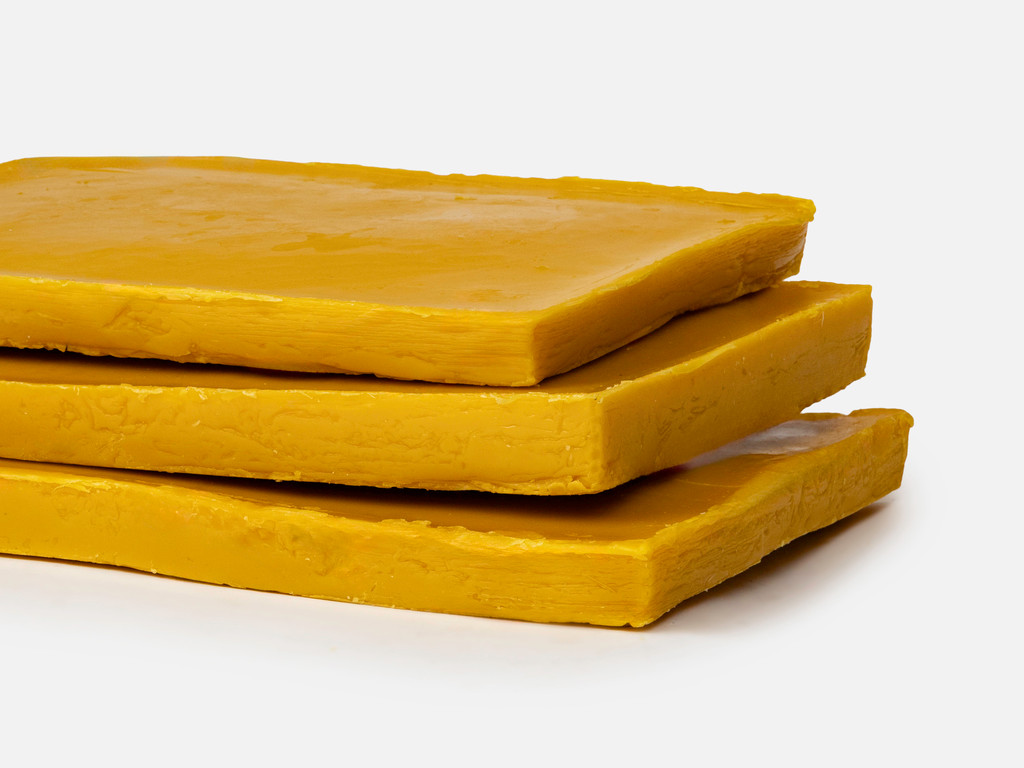
Beeswax has a natural, distinctive scent, a higher melting point than most paraffins, and a warmer, deeper colour in its natural state. It also burns more slowly, which extends the finished candle’s burn time. Its cost is significantly higher than paraffin, which is why choosing it is usually tied to a specific product positioning.
Pure beeswax or a blend
100% beeswax gives the strongest character, but is more demanding to pour because of how much it shrinks as it cools. Many producers prefer a beeswax-paraffin blend, at a ratio set by budget and the result they want, to keep some of beeswax’s character with more predictable pouring behaviour.
What to watch if you’re trying it for the first time
- Pour temperature: usually higher than what you’re used to with paraffin.
- Wick choice: the denser blend often needs a different ply than plain paraffin.
- Storage: beeswax’s natural scent can be affected if it’s stored near strong-smelling materials.
We stock natural beeswax suitable for candle making. Ask us for samples if you’d like to test it in a blend.