

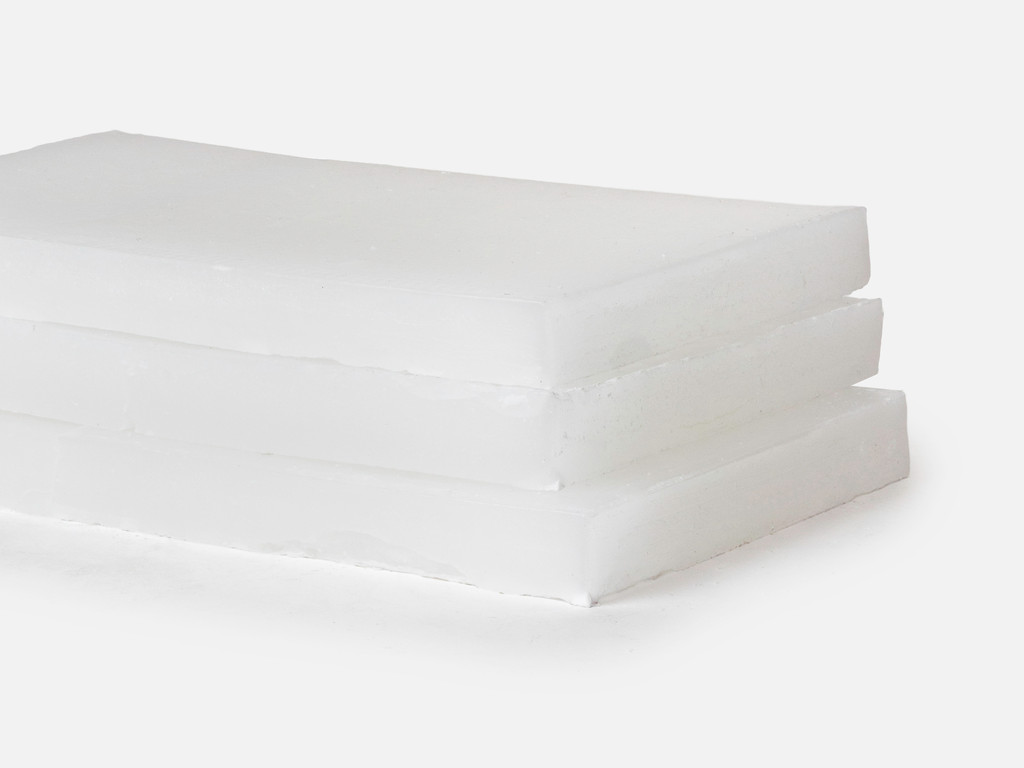
Melting point as the first selection criterion
A paraffin’s melting point largely determines what it’s suited for. Lower-melting-point paraffins work more easily in container candles, while higher-melting-point paraffins hold their shape better in pillar candles that need to stand unsupported.
Purity & hardness
A paraffin’s purity affects the clarity and scent throw of the finished candle, as well as how cleanly it burns without excess soot. Hardness, meanwhile, determines how well the candle withstands knocks and transport, which matters a great deal if your product travels far before reaching the end customer.
When it’s worth testing a different grade
- Seasonal change: storage and transport temperature affects how well a candle holds its shape.
- A new product line: a different candle size or shape often means different hardness requirements.
- Customer complaints about surface finish: often solved by changing paraffin grade, not just the additive ratio.
We stock paraffin at different melting points and purity grades. Tell us what you’re making and we’ll suggest the right grade.